
Sunday, July 29, 2012
Canine Heartworms and Inexpensive Prevention
I'm posting this on my Blog as I get so many new owners asking about what to do for heartworm.
 from: http://www.k911.biz/Petsafety/HeartwormTreatment.htm
The information below was obtained from http://www.beaglesunlimited.com/health/canine-heartworms-and-inexpensive-prevention.
But ultimately you must decide what you'll use. I'm just sayin' this works for us...Abundant health be with you and your beloved canines.
This article will discuss the canine heartworms and how you can keep them from infecting your Beagle (works for Anatolians as well) at the absolute lowest cost.
If you live in the United States, you have heartworms (Dirofilaria immitis) in your area. This parasite is present in all fifty states, but most common in the more temperate parts of the country. The heartworm larva (Dirofilaria immitis microfilariae) is spread from dog to dog by mosquitoes. When an infected mosquito feeds off a dog, it passes the infection into the bloodstream. The larva or microfilariae stay in the bloodstream for a period of time and then attach themselves to the inside of the heart and can also be found in the blood vessels of the lungs. When they mature in the heart they add their own microfilariae to the blood stream. The adult worms cause debilitating disease, reduce performance, and may cause death. Click on the hyper linked text and view a picture of "The Life Cycle of Heartworms". The dog can usually be cured if the heartworm infestation is diagnosed early enough. The cost of this cure can vary from a minimum of $175 to as much as $350 or more. After treatment, the dog must be laid up for a minimum of 30 days -- that is the bad news.
The good news is that heartworms can be prevented for less than one cent per day for a 20 pound dog (Beagle size). Yes, I said less than one cent per day (30 cents monthly). Myself and other Beaglers have used a prevention (that I will describe in this article) since the early 1980's, with no heartworm infestations. Once again, I want to remind everyone that I am not a Veterinarian, but rather a long time Beagle kennel owner. I'll tell you what I use and do, you can use your own judgment whether you want to follow in my footsteps. This article is presented only as a documentation of how I prevent heartworms in my Beagles at a fraction of the cost that a Veterinarian will charge for the Merck Heartgard ™ (Ivermectin), chewable tablets. Also, the law restricts Heartgard to use by or on the order of a licensed Veterinarian; therefore, if you use the prescription tablets you will be paying $15 - $45 for a box of 6 tablets (six month supply) plus the cost of an occasional office visit.
I use the same chemical that is in those expensive (prescription only) pills at a fraction of the cost. The prevention that I use is given once every 30 days (monthly) the same as the pills. In parts of the country during the coldest times of the year when no mosquitoes could survive, the prevention can even be suspended until the weather starts warming up again. If you suspect a dog may already have heartworms, before putting a dog on the following prevention it should be checked by a Vet to be sure it has no heartworms. The cost of this exam is generally between $5 - $15. It is a lot cheaper to have the exam to make sure your dog is not already infected, than it is to have a Vet save an infected dog during the advanced stages of heartworm infestation. This prevention (describe below) is only good to prevent an infection from ever occurring, once a dog is already infected then it must be given the very expensive treatment described in the first paragraph of this page.
The exam consists of a vet drawing a small amount of blood, putting a smear of it on a slide and looking at it through a microscope. The microfilariae look like tiny wiggler fishing worms. This prevention is not to be given to collies or part collies. What I use is Ivermectin. It is a 1% injectible cattle wormer with the trade name of Ivomec ™ . You can purchase it (without a prescription) for $40 - $50 at your Veterinarian Supply Store or through a catalog from a Vaccine Wholesale Supplier. The bottle comes in a 50cc size. I give it orally which means by the mouth. I use 1/10th of 1cc for each 10 pounds of body weight. The syringes I use are 3cc and are marked off in tenths of 1cc.
The way I do it is to draw out 2cc of Ivomec. Then I inject what is needed into an empty syringe (without a needle) with the plunger pulled down on the 1cc mark. I dribble it into the empty one until I have the proper amount. I will have a few ounces of soft drink or orange juice in an open container. I will draw in 1½ - 2cc of the juice to mix with the Ivomec. I put my finger over the end of the syringe and shake up the mixture. The reason for this is to give me more volume to work with and to make it taste better for the dog. I put my hand across the dog's nose with my thumb on one side and my fingers on the other side. Then I put pressure on my thumb and fingers to force open the dog's mouth. I then tip its head up and squirt the contents of the syringe in the roof of its mouth. Finally, I then close the mouth and hold it closed until the dog swallows. This is the only correct way to orally administer all types of liquid medications to dogs so that you do not accidentally squirt the liquid into the dog's windpipe and/or lungs.
I do this treatment to each and every Beagle once every 30 days. The Ivomec kills all those little microfilariae (larva) in the bloodstream so they never have a chance to mature into heartworms. Microfilariae will circulate in the blood for more than 30 days before attaching to the heart, so if you give this prevention on schedule there is "NO POSSIBLE WAY" for your dog to get heartworms. Even if a drug is labeled as safe for pregnant and/or lactating bitches. Personally, I don't recommend you give any kind of medications to a pregnant bitch unless the life of the bitch is in grave danger; however, I will give medications to lactating bitches. The difference is the pups are already born and not in their developing and forming stages in the womb.
The cost is very minimal for each dog. If the 50cc bottle of Ivomec costs you $40.00, this is 80 cents per cc. Given 12 months in a row, a 20 lb. dog will take 2½cc per year. That is a cost of $2.00 for a one year prevention. The shelf life for the Ivomec is about 3 years if kept refrigerated. Therefore, this method is feasible to use even if you only have one Beagle (dog), and it is by far the cheapest and most effective prevention against heartworms. If you have two or more dogs this can save you hundreds of dollars per year.
from: http://www.k911.biz/Petsafety/HeartwormTreatment.htm
The information below was obtained from http://www.beaglesunlimited.com/health/canine-heartworms-and-inexpensive-prevention.
But ultimately you must decide what you'll use. I'm just sayin' this works for us...Abundant health be with you and your beloved canines.
This article will discuss the canine heartworms and how you can keep them from infecting your Beagle (works for Anatolians as well) at the absolute lowest cost.
If you live in the United States, you have heartworms (Dirofilaria immitis) in your area. This parasite is present in all fifty states, but most common in the more temperate parts of the country. The heartworm larva (Dirofilaria immitis microfilariae) is spread from dog to dog by mosquitoes. When an infected mosquito feeds off a dog, it passes the infection into the bloodstream. The larva or microfilariae stay in the bloodstream for a period of time and then attach themselves to the inside of the heart and can also be found in the blood vessels of the lungs. When they mature in the heart they add their own microfilariae to the blood stream. The adult worms cause debilitating disease, reduce performance, and may cause death. Click on the hyper linked text and view a picture of "The Life Cycle of Heartworms". The dog can usually be cured if the heartworm infestation is diagnosed early enough. The cost of this cure can vary from a minimum of $175 to as much as $350 or more. After treatment, the dog must be laid up for a minimum of 30 days -- that is the bad news.
The good news is that heartworms can be prevented for less than one cent per day for a 20 pound dog (Beagle size). Yes, I said less than one cent per day (30 cents monthly). Myself and other Beaglers have used a prevention (that I will describe in this article) since the early 1980's, with no heartworm infestations. Once again, I want to remind everyone that I am not a Veterinarian, but rather a long time Beagle kennel owner. I'll tell you what I use and do, you can use your own judgment whether you want to follow in my footsteps. This article is presented only as a documentation of how I prevent heartworms in my Beagles at a fraction of the cost that a Veterinarian will charge for the Merck Heartgard ™ (Ivermectin), chewable tablets. Also, the law restricts Heartgard to use by or on the order of a licensed Veterinarian; therefore, if you use the prescription tablets you will be paying $15 - $45 for a box of 6 tablets (six month supply) plus the cost of an occasional office visit.
I use the same chemical that is in those expensive (prescription only) pills at a fraction of the cost. The prevention that I use is given once every 30 days (monthly) the same as the pills. In parts of the country during the coldest times of the year when no mosquitoes could survive, the prevention can even be suspended until the weather starts warming up again. If you suspect a dog may already have heartworms, before putting a dog on the following prevention it should be checked by a Vet to be sure it has no heartworms. The cost of this exam is generally between $5 - $15. It is a lot cheaper to have the exam to make sure your dog is not already infected, than it is to have a Vet save an infected dog during the advanced stages of heartworm infestation. This prevention (describe below) is only good to prevent an infection from ever occurring, once a dog is already infected then it must be given the very expensive treatment described in the first paragraph of this page.
The exam consists of a vet drawing a small amount of blood, putting a smear of it on a slide and looking at it through a microscope. The microfilariae look like tiny wiggler fishing worms. This prevention is not to be given to collies or part collies. What I use is Ivermectin. It is a 1% injectible cattle wormer with the trade name of Ivomec ™ . You can purchase it (without a prescription) for $40 - $50 at your Veterinarian Supply Store or through a catalog from a Vaccine Wholesale Supplier. The bottle comes in a 50cc size. I give it orally which means by the mouth. I use 1/10th of 1cc for each 10 pounds of body weight. The syringes I use are 3cc and are marked off in tenths of 1cc.
The way I do it is to draw out 2cc of Ivomec. Then I inject what is needed into an empty syringe (without a needle) with the plunger pulled down on the 1cc mark. I dribble it into the empty one until I have the proper amount. I will have a few ounces of soft drink or orange juice in an open container. I will draw in 1½ - 2cc of the juice to mix with the Ivomec. I put my finger over the end of the syringe and shake up the mixture. The reason for this is to give me more volume to work with and to make it taste better for the dog. I put my hand across the dog's nose with my thumb on one side and my fingers on the other side. Then I put pressure on my thumb and fingers to force open the dog's mouth. I then tip its head up and squirt the contents of the syringe in the roof of its mouth. Finally, I then close the mouth and hold it closed until the dog swallows. This is the only correct way to orally administer all types of liquid medications to dogs so that you do not accidentally squirt the liquid into the dog's windpipe and/or lungs.
I do this treatment to each and every Beagle once every 30 days. The Ivomec kills all those little microfilariae (larva) in the bloodstream so they never have a chance to mature into heartworms. Microfilariae will circulate in the blood for more than 30 days before attaching to the heart, so if you give this prevention on schedule there is "NO POSSIBLE WAY" for your dog to get heartworms. Even if a drug is labeled as safe for pregnant and/or lactating bitches. Personally, I don't recommend you give any kind of medications to a pregnant bitch unless the life of the bitch is in grave danger; however, I will give medications to lactating bitches. The difference is the pups are already born and not in their developing and forming stages in the womb.
The cost is very minimal for each dog. If the 50cc bottle of Ivomec costs you $40.00, this is 80 cents per cc. Given 12 months in a row, a 20 lb. dog will take 2½cc per year. That is a cost of $2.00 for a one year prevention. The shelf life for the Ivomec is about 3 years if kept refrigerated. Therefore, this method is feasible to use even if you only have one Beagle (dog), and it is by far the cheapest and most effective prevention against heartworms. If you have two or more dogs this can save you hundreds of dollars per year.

Thursday, May 10, 2012
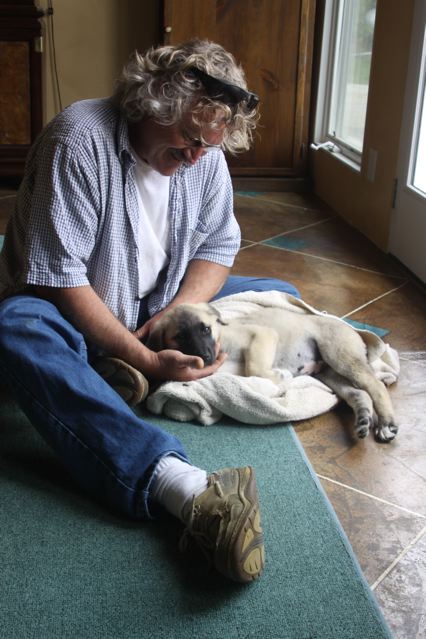
Our Puppies!


Thursday, February 16, 2012
Our Current Litter DOB: FEB. 7, 2012

Our six boys, three are Pinto, two are Dutch, one is Fawn w/black mask

Our five girls, three are Dutch, two Fawn w/Black mask

All eleven of them taken at one day old....the journey begins
Tuesday, February 14, 2012
Bottle Feeding Recipe for Puppies
Bottle Feeding Recipe
10 oz. of canned evaporated milk OR whole goat's milk (mary:fresh goat's milk is my first choice when it's available), (not pasteurized cow's milk - this will cause scowers - dogs cannot drink normal cow's milk. Dogs cannot drink 1%, 2%, Skim, or Whole milk.) Whole goat's milk is by far the best to use. Walmart sells both evaporated milk, whole goat's milk and evaporated goats milk. Make sure you are using EITHER evaporated milk OR whole goat's milk. Do NOT use sweetened condensed milk!
3 oz. sterilized water (baby water OR boiled water that is then cooled).
This is NOT needed if using whole goat's milk.
1 raw egg yolk.
1 cup of plain yogurt (avoid skim or fat free if at all possible).
1/2 Tsp Karo Syrup or Corn Syrup (mary: I prefer Blackstrap Molasses)(NOT HONEY!)
****If you cannot find Karo or Corn syrup where you live, you can do a Google search for “substitute for Karo syrup” and get some options.****
When you Google “substitute for Karo syrup" here is what you may came up with- 1 c Karo can be subbed with 1 c white sugar and 1/4 c hot water (cook it to dissolve in the water best you can get it to. Depending on the recipe, if you need the sugar to be completely dissolved you might need to add a bit more water).
Place ingredients in a blender and blend or use a wire whisk. Be careful to not over blend and create a milk shake full of bubbles and then tube bubbles into the puppy.
Keep cool and discard leftovers after 7 days.
Warm formula to body temperature (dogs are around 101 degrees). Discard any un-used formula. This is a thick mixture - use a stomach tube to tube feed or enlarge the hole in the nipple for easy access for the pup
10 oz. of canned evaporated milk OR whole goat's milk (mary:fresh goat's milk is my first choice when it's available), (not pasteurized cow's milk - this will cause scowers - dogs cannot drink normal cow's milk. Dogs cannot drink 1%, 2%, Skim, or Whole milk.) Whole goat's milk is by far the best to use. Walmart sells both evaporated milk, whole goat's milk and evaporated goats milk. Make sure you are using EITHER evaporated milk OR whole goat's milk. Do NOT use sweetened condensed milk!
3 oz. sterilized water (baby water OR boiled water that is then cooled).
This is NOT needed if using whole goat's milk.
1 raw egg yolk.
1 cup of plain yogurt (avoid skim or fat free if at all possible).
1/2 Tsp Karo Syrup or Corn Syrup (mary: I prefer Blackstrap Molasses)(NOT HONEY!)
****If you cannot find Karo or Corn syrup where you live, you can do a Google search for “substitute for Karo syrup” and get some options.****
When you Google “substitute for Karo syrup" here is what you may came up with- 1 c Karo can be subbed with 1 c white sugar and 1/4 c hot water (cook it to dissolve in the water best you can get it to. Depending on the recipe, if you need the sugar to be completely dissolved you might need to add a bit more water).
Place ingredients in a blender and blend or use a wire whisk. Be careful to not over blend and create a milk shake full of bubbles and then tube bubbles into the puppy.
Keep cool and discard leftovers after 7 days.
Warm formula to body temperature (dogs are around 101 degrees). Discard any un-used formula. This is a thick mixture - use a stomach tube to tube feed or enlarge the hole in the nipple for easy access for the pup
Sunday, January 22, 2012
Kus Sarkisi Keno Keskin, daughter of Dillara & Dillon

KENO_________________at 22 months of age
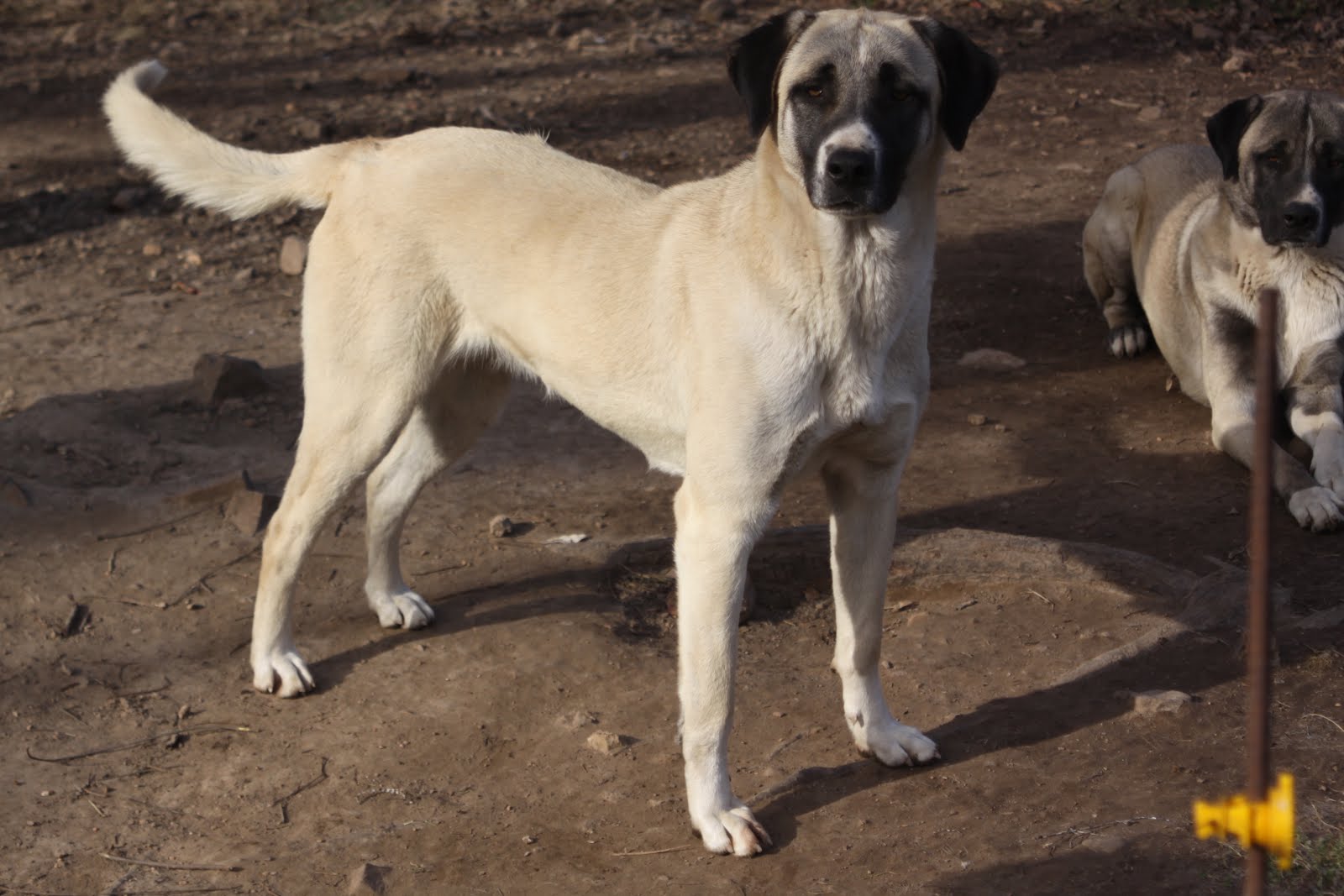
She is outstanding in her structure as well as being a true hearted LGD and good loving and sweet girl
Thursday, August 04, 2011


Puppies growing photos, Tig/Rummy

What a beautiful litter of pups...First time having Pintos in a litter!

1 week girls

1 week boys

The boys

The girls
Puppies by TB Tig & The Cedars' Rumpelstiltskin KS "Rummy"

Ten puppies born June 18, 2011, six beautiful girls, 3 Pinto and 3 fawn w/black mask. Four boys, 1 dutch marked, 3 fawn w/black mask.


Rummy, dark fawn w/black mask, DOB:

 |
| This is TB Tig. She is fawn with black mask and dutch markings, has a wonderful character and loves her livestock. DOB: 2/14/2006 OFA: Fair and about about 29"-30" |


The Courtship...


Wednesday, December 29, 2010
Gideon is the other boy from Sirin and Rummy

At of today, he is available to a livestock guardian home. He is a very sweet boy, great disposition, excellent structure and would fit in well with a family. Call for more details or questions.
Saturday, December 18, 2010
My, how they grow....

This is Gabe at 8 wks, M1 in the litter from Flat Creek Sirin Ruh C and The Cedars' Rumpelstiltskin KS, "Rummy".

Gabe at 4 months

Gabe at 9 months just went to live with his new family in Alabama and his playmate Queenie, a six month old Anatolian. Photos to be posted later
Where Are They Now....Photos of our Pups w/their families

This is Jasper at 10 months, his buddy is Henry. Jasper was living with Zuzana and her family but went missing in Sept. 2010. He is sorely missed.
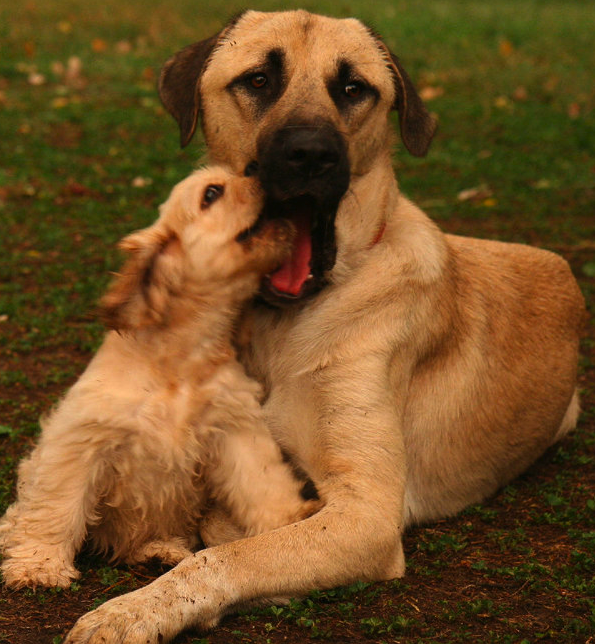

This is Hal, 8 months, in California, living in a livestock guardian and show home with Lyne. That is Tinkerbell, his buddy, behind him. Hal was sired by our boy Lost Horizons Alec of Avanos (Alec) and CH Kus Sarkisi Cana Melek (Melek)

This is Isis, 9 months, in New Mexico with her German Pincher family

Isis enjoying the snow day

Isis at 7 months. Isis is living in a show/companion home with Jill. Looking awesome..Isis is out of Kus Sarkisi Suna Dilara (Dilara) and Island Farm's Prime Suspect (Dillon)

This is Scout at 5 months, living in Missouri with Dale. Dale writes me and says, "She has the BEST personality of any dog I have owned. Loves children and our other dogs. Was house broken in two weeks. My only complaint would be that she is a little hard to obedience train because she doesn't care that much about food." Gee that's not typical of an Anatolian, LOL....Scout is out of Kus Sarkisi Suna Dilara and Island Farm's Prime Suspect

This is Griz at 10 months, living in Ava, Missouri with Dan & Kathleen. Kathleen writes "Other than him barking at ??? in the wee hours of the morning (between 12:01 am and 5:00 am!), he is being a good boy. He likes to chase the barn cats, but he doesn’t even attempt it with the inside cat. He doesn’t chase the chickens which is good and he has met the cattle and he keeps his distance and isn’t a pain.
His sheep whine when he is not in the pen area with him, even though I have caught him chasing them (and yes, I’ve scolded him…doesn’t mean he stops). I think a lot of it is puppy stuff, especially like last night when it was cool and all the critters were feeling their oats. He was fired up! I’m not sure if there is a way to teach him what is appropriate to bark at and what isn’t, but we’ll figure it out." Griz is out of Alec and Tig.
Subscribe to:
Posts (Atom)